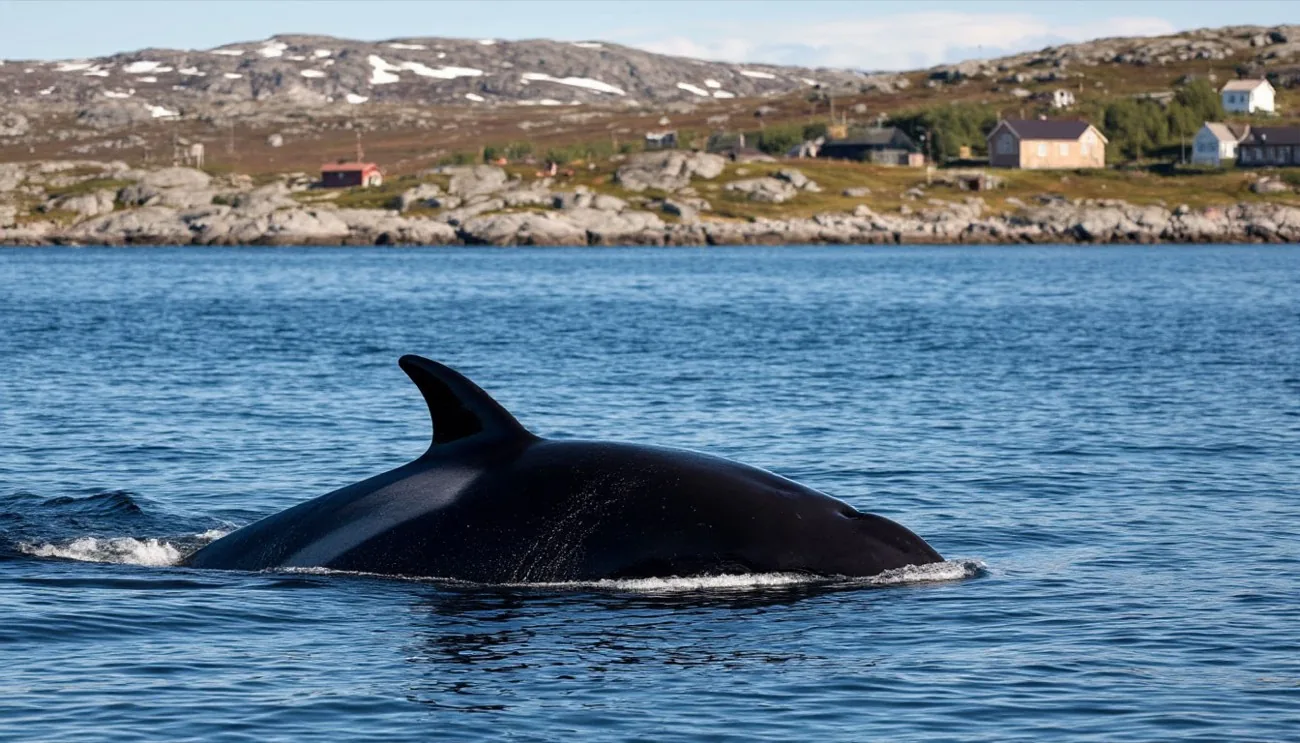
Whale-watching boats near Murmansk head out to sea from several points — from Teriberka, from Ura Guba and from the Rybachy and Sredny peninsulas. Teriberka is the most accessible and popular: it is the easiest place to reach, and most one-day boat trips are organised from here.
You can watch whales from May to September. No one can give a 100% guarantee: whales are wild, and you cannot order the Arctic weather. But in season, with an experienced captain who knows the feeding grounds, the chances of an encounter are high. Below is everything you need to know before the trip: when to go, which whales and sea creatures you can realistically see, how the boat trip works and how much it costs.
01When is whale season in Teriberka: month by month
Whales come to the coast of the Kola Peninsula following the fish — herring, capelin and polar cod. As long as there is food in the Barents Sea, there are whales. Boat trips run in the warm season, when the water is calmer and vessels sail on a steady schedule.
| Month | Chance of seeing whales | Comment |
|---|---|---|
| May | Medium–high | Start of the season, fish move towards the shore, whales are already spotted |
| June | High | Plenty of food, active whales, the long polar day |
| July | High | Calm sea, weather that is warm for the North |
| August | High | Steady trips out to sea |
| September | High | Fewer tourists, often excellent visibility |
The season runs from May to September — in the other months there are no regular boat trips to the whales. You can catch a great shot in any month of the season: people come precisely to see and photograph whales, and there is no month that is "better for photos" here — weather and luck matter more.
02Who you can see at sea
The waters of the Barents Sea off Teriberka are home to a rich marine world. Tourists most often meet whales, but a trip out to sea almost always brings an encounter with one of the local inhabitants.
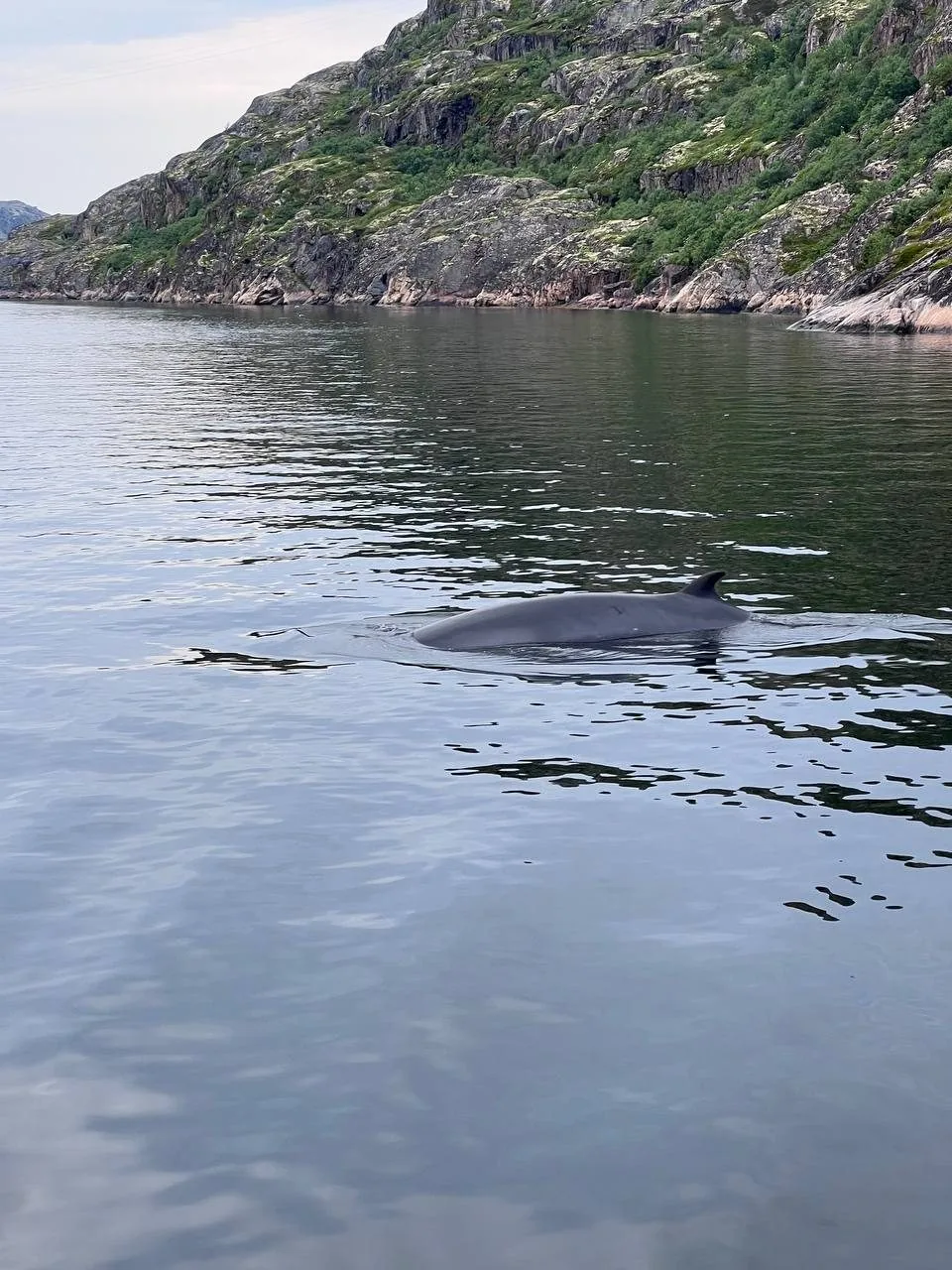
Minke whale
The most frequent guest. A small baleen whale with a curved dorsal fin, it often comes close to the boats.
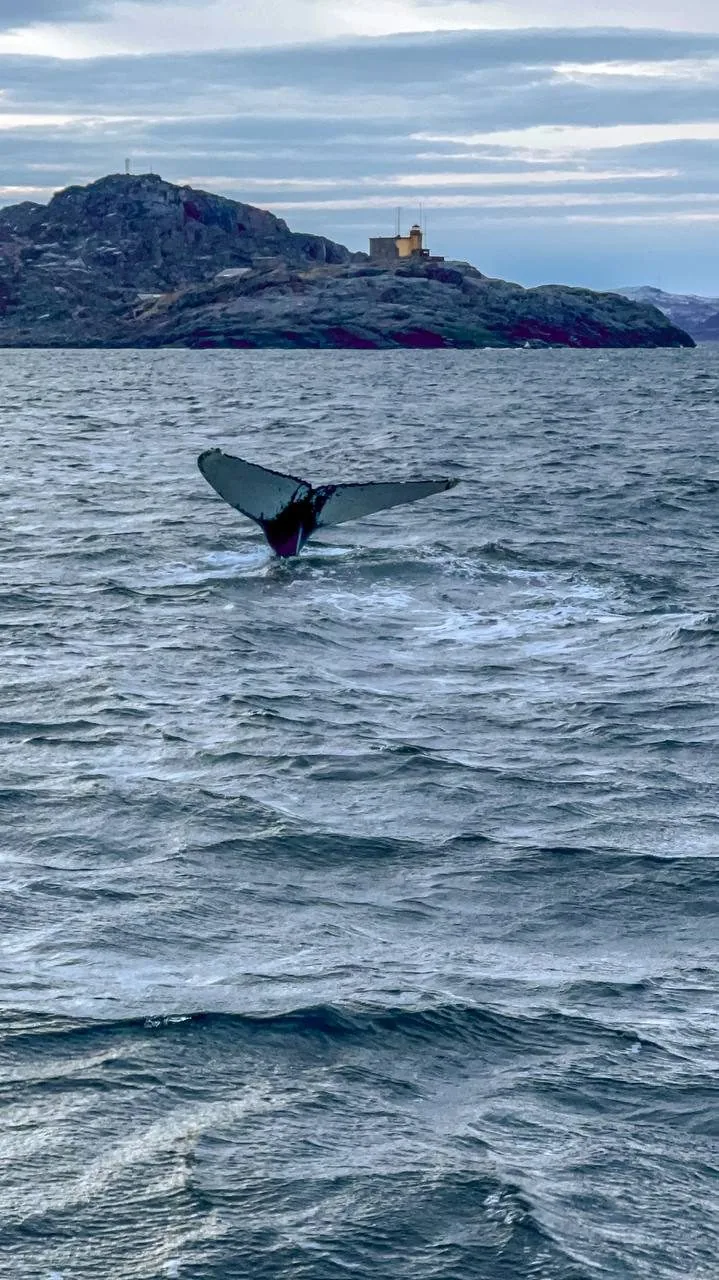
Humpback whale
A large whale that spectacularly shows its "butterfly" tail before a deep dive. The shot every tourist wants most.
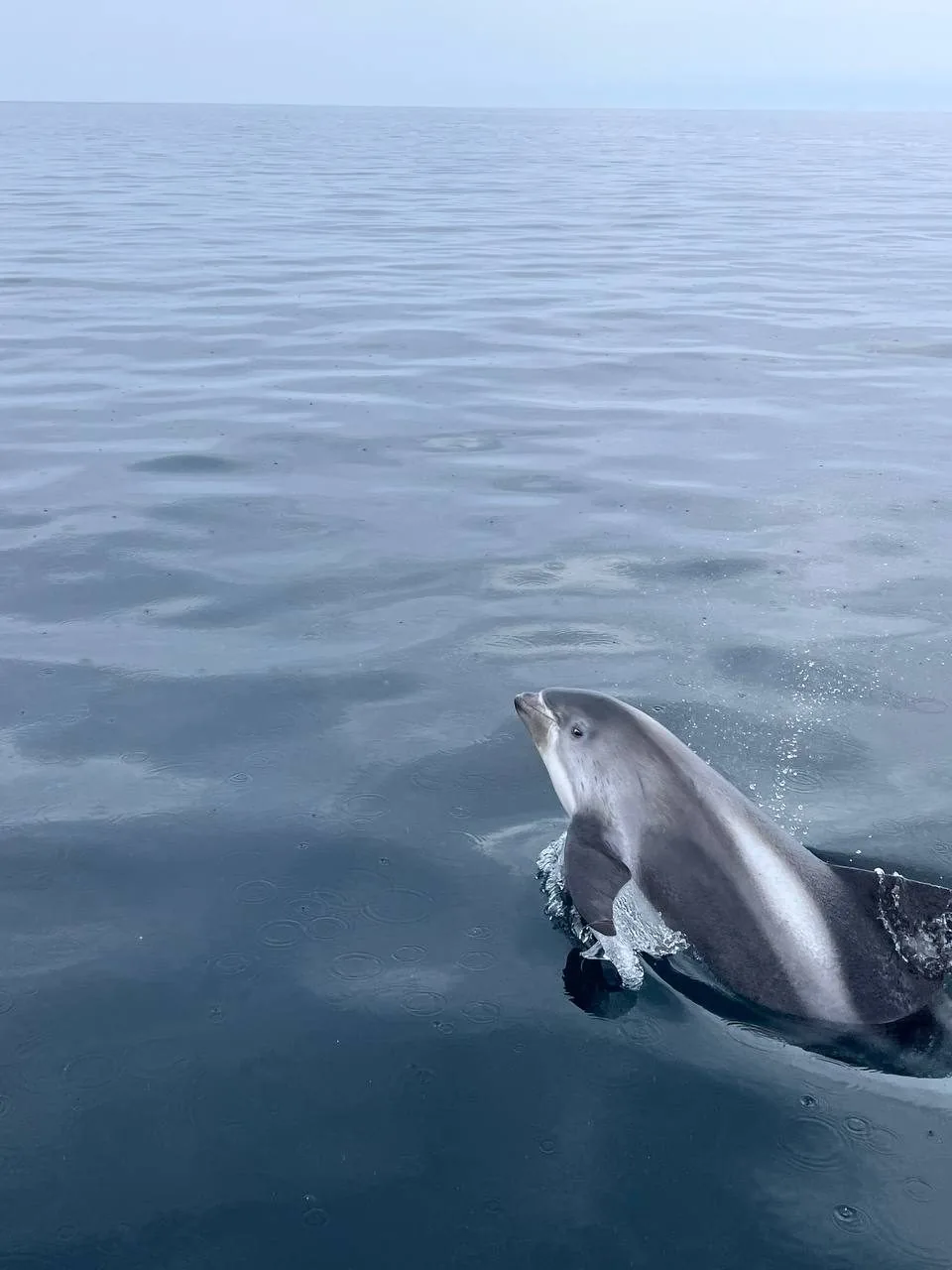
White-beaked dolphins
Fast and curious, they follow the boat and leap out of the water. They are seen in whole pods.
Who else you might meet:
🐋 Fin whale — the second largest animal on the planet after the blue whale, seen less often.
🤍 Belugas — white polar whales that sometimes come in groups.
🖤 Orcas — a rare but possible encounter.
🐬 Harbour porpoises — the smallest cetaceans of our waters.
🦭 Seals and bearded seals — the large seals of the Barents Sea, which curiously poke their heads out of the water by the cliffs.
03A rich world of Barents Sea birds
The coast and islands around Teriberka are also a true bird paradise. On the coastal cliffs, bird colonies nest: thousands of birds perch in tiers on the sheer rocks and fill the air with their cries.
Here you can see kittiwakes, guillemots, gulls, cormorants, Arctic terns and eiders, and on the far capes and islands there are colonies of seabirds that photographers and ornithologists travel here specially to see. During the boat trip birds accompany the vessel almost the whole way, so you will certainly not go without photos.
04Where whales are watched: how the boat trip works
Whale-watching trips start from the Barents Sea coast — from Teriberka, as well as from Ura Guba or from Rybachy. Tourists board a small vessel that heads out of the bay into the open sea. It takes about half an hour to reach the places where whales are usually found; there the boat slows down and the most exciting part begins — the search.
The captains are locals, and they know where the fish come this season, and the whales after them. A whale first gives itself away by its spout — a little cloud of water vapour above the surface — then a dark back or the wave of a tail appears. The water in the Barents Sea is cold and often choppy, so a trip out to sea is always a bit of an adventure.
05How to get to Teriberka from Murmansk
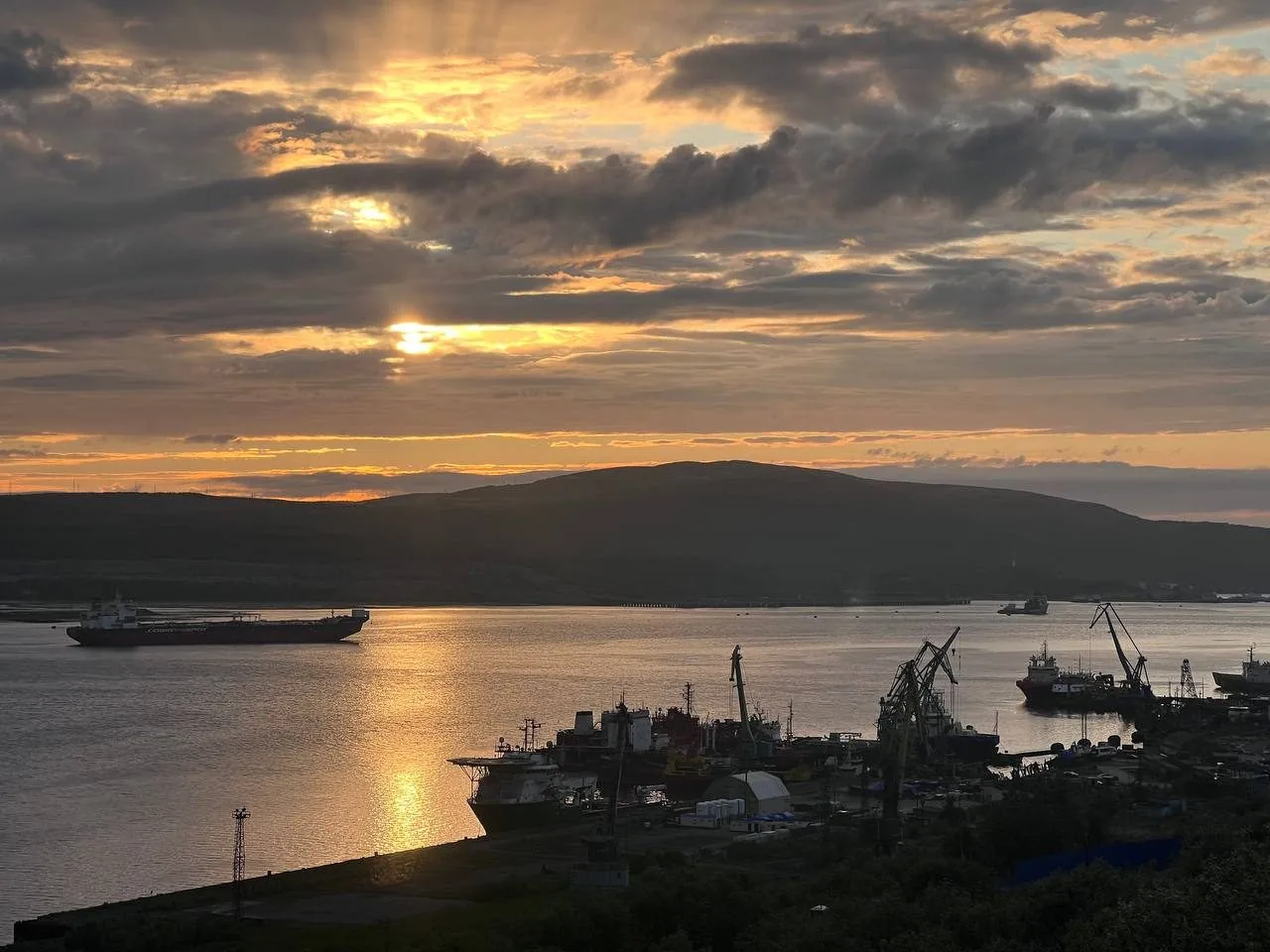
Teriberka is about 120 km from Murmansk, and the drive takes roughly 2–2.5 hours one way. Most tourists do not have their own car, and public transport is infrequent and not timed to the boat trips. So the simplest option is a one-day excursion from Murmansk with a transfer: you are picked up in the city, driven to Teriberka, taken on a boat trip and brought back.
This format saves your energy and takes care of all the logistics: there is no need to look for a boat, negotiate with a captain or keep track of the schedule.
06Is it realistic to see a whale — an honest look at the odds
Every tourist's main question: "Are we definitely going to see a whale?" The honest answer is that no one can promise a whale 100%, and anyone who does is bending the truth. Whales are wild animals, they move to follow their food, and the Arctic sets its own terms when it comes to weather and waves.
07What to bring on the boat trip
When getting ready for the boat trip, bring:
- a warm windproof jacket and trousers, a hat and gloves — even in July;
- waterproof shoes and a rain jacket in case of spray and waves;
- a charged phone or camera — the shots with whales come out stunning;
- if you are prone to seasickness — motion-sickness pills in advance, 30–40 minutes before heading out to sea.
Everything else for the programme (transfer, boat, guide) is already included in an organised tour.
08What else to see in Teriberka
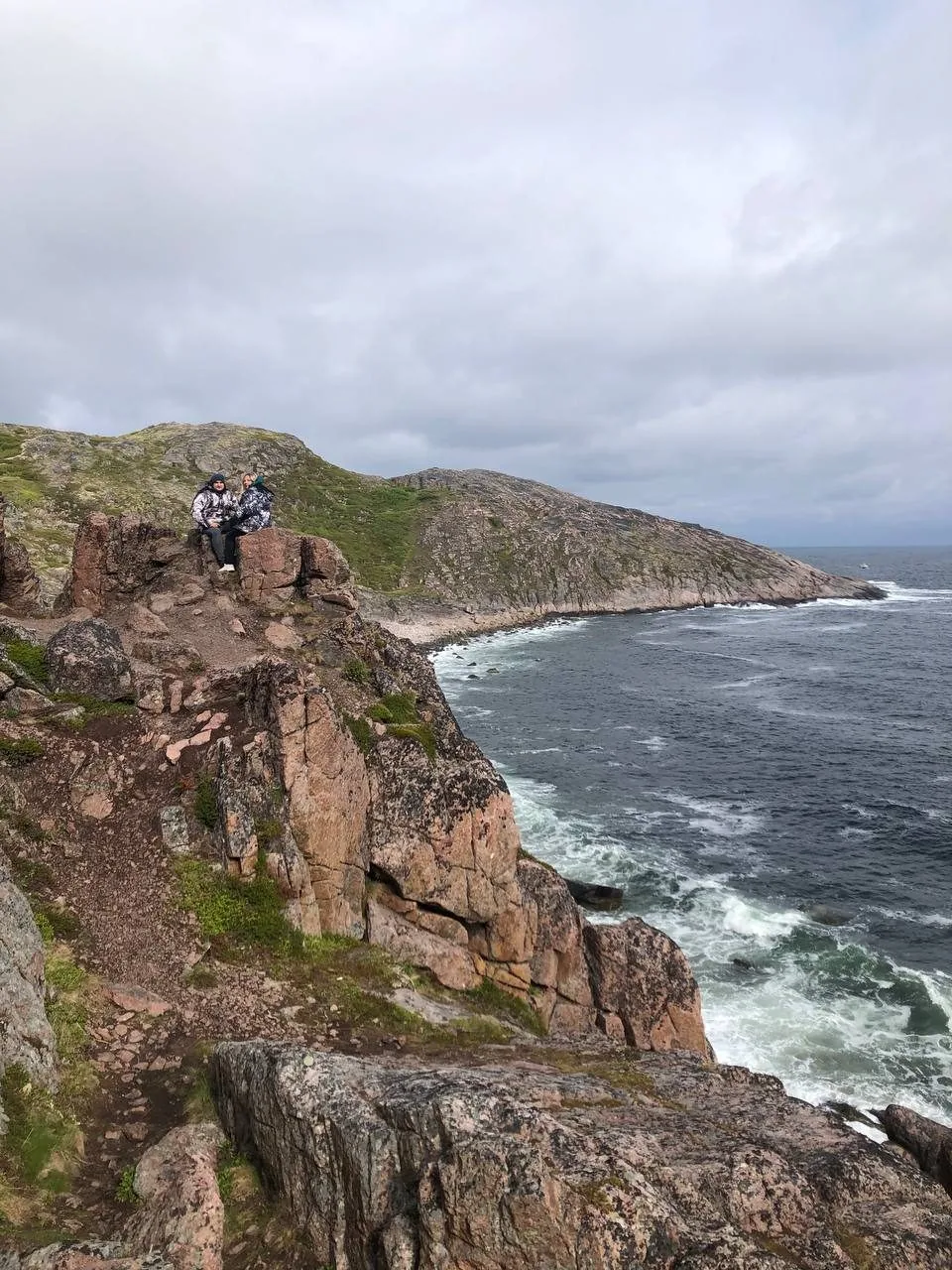
It makes sense to combine the whale trip with Teriberka's main sights — everything is close by:
- The ship graveyard — the wooden hulls of fishing boats on the shore of the bay, one of the most recognisable sights of the Russian North.
- The Batareysky waterfall — it drops almost straight into the sea from Lake Maloye Batareyskoye; a trail along the rocky coast leads to it.
- The "Dragon Eggs" — giant round boulders on the beach, polished smooth by the sea.
- The swing by the Barents Sea and the art installations — the very shots that made Teriberka famous after the film "Leviathan".
In one full day you can see both the whales and all of Teriberka's key spots.
09How to choose a whale-watching trip
When choosing a tour, pay attention to three things: whether the guide is local (they know the season and the spots), whether a transfer from Murmansk is included (otherwise the logistics fall on you) and whether they speak honestly about the odds (promises of a "100% whale" are a warning sign).
One-day tour to Teriberka in search of whales
A transfer from Murmansk, a trip out into the Barents Sea, a local guide and Teriberka's main sights — the ship graveyard, the Batareysky waterfall and the "Dragon Eggs" — all in one programme.
10Frequently asked questions
You can watch whales from May to September. That is the whole boat-trip season; there is no month that is clearly better than the others — it all comes down to weather and luck, and you can see and photograph whales in any month of the season.
Most often it is the minke whale and the humpback whale, less often the fin whale. You may also meet belugas, orcas, white-beaked dolphins, harbour porpoises, seals and bearded seals. On top of that there are bird cliffs with kittiwakes, guillemots, cormorants and eiders.
In season, going out to sea with an experienced captain, the chances are high, but no one can give a 100% guarantee — whales are wild and the Arctic weather is changeable.
A one-day tour to Teriberka with a transfer from Murmansk, a boat trip and a local guide costs 10,000 ₽ per person.
Teriberka is about 120 km from Murmansk, a drive of roughly 2–2.5 hours. The easiest option is a one-day excursion with a transfer, so you do not have to deal with the logistics and find a boat yourself.
It is almost twice as cold on the water as on land, so you need warm windproof clothing, a hat and gloves even in summer, waterproof shoes and a rain jacket, a charged camera, and — if you are prone to seasickness — motion-sickness pills.